
What Is 0W20 Synthetic Oil Used For?
What is 0W-20 synthetic oil used for? The specific engine types and driving conditions it was actually engineered around, plus the 0W-16 mix-up almost every other article glosses over. US & Canada, 2026.
$20/year, up to 25% off every order, no quotas or minimums. See how the membership works →
By Alan Williams, AMSOIL Direct Jobber #1243776 · Tomball, TX · 225-441-6397
20+ years selling oil across every kind of vehicle in the driveway, and the “what’s 0W-20 used for” question usually turns out to actually be “is this the right oil for MY specific car,” so that’s how I’ve answered it here.
Last updated 2026. Reviewed against current ILSAC and manufacturer service specifications.
On This Page
Quick Answer
0W-20 synthetic oil is used primarily in modern gasoline engines engineered for fuel economy and fast cold-start protection: hybrid vehicles with frequent start-stop cycling, small-displacement turbocharged and direct-injection engines, and naturally aspirated four-cylinder engines built with tighter tolerances specifically around this viscosity’s flow characteristics.
It is not a universal upgrade. It’s used because specific manufacturers engineered specific engines around it, most commonly Japanese and Korean automakers, and a growing number of American and European turbocharged applications. If your manufacturer doesn’t specify it, that’s a real signal, not an oversight.
By Application
7 Specific Applications 0W-20 Was Built For

1. Hybrid vehicles with frequent start-stop cycling
Hybrid gasoline engines cycle on and off constantly as the electric motor takes over, meaning the engine experiences far more cold-start events per mile than a conventional car. 0W-20’s fast-flow property is specifically valuable here, and it’s why Toyota specifies it across the Prius, Camry Hybrid, and Highlander Hybrid lineup, along with Honda’s Accord Hybrid and Ford’s Maverick Hybrid.
2. Small-displacement turbocharged engines
A number of modern turbo engines specify 0W-20 meeting the ILSAC GF-6A “Resource Conserving” standard, including the Ford EcoBoost 2.3L, Hyundai’s 1.6T and 2.0T engines, and select Toyota turbo applications. This wasn’t a marketing decision, the viscosity requirement was set based on actual turbocharger bearing testing at real operating temperatures.
3. High-compression naturally aspirated engines (like Mazda Skyactiv)
Mazda’s Skyactiv engine family runs unusually high compression ratios for a naturally aspirated design, and 0W-20 is the factory standard across the lineup, chosen for how it balances fuel efficiency against that engine architecture’s specific thermal and friction characteristics.
4. Meeting CAFE fuel economy regulations across a lineup
A meaningful reason 0W-20 became so widespread industry-wide is regulatory: US Corporate Average Fuel Economy (CAFE) standards push automakers toward every available efficiency gain across their fleet, and specifying a lighter, ILSAC “Resource Conserving” viscosity across as many models as possible is one of the more straightforward ways to move that average.
5. Compact four-cylinder daily drivers
Beyond hybrids and turbos, a large share of mainstream compact and midsize four-cylinder engines, particularly from Toyota, Honda, Nissan, Kia, and Hyundai, now specify 0W-20 as their standard fill, reflecting how broadly this viscosity has become the default rather than a niche choice.
6. Cold-climate daily driving
For any engine specified for it, 0W-20 delivers a genuine practical advantage in regions with real winters, immediate flow at startup rather than the slower circulation of a heavier grade during sub-freezing mornings.
7. Extended service interval programs
Manufacturers pairing 0W-20 with a well-formulated full synthetic base often build it into longer factory-recommended service intervals, since a quality synthetic 0W-20 holds up to the reduced friction and lower pumping demands over more miles than a conventional oil of the same grade.
Match your engine’s actual application with the right full synthetic 0W-20, at wholesale pricing as a Preferred Customer.
A Common Mix-Up
The 0W-16 vs. 0W-20 Mix-Up
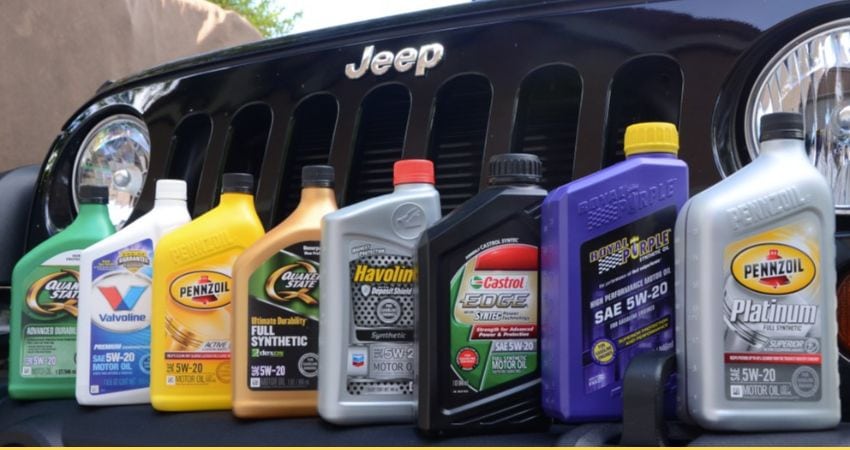
Most articles on this topic lump every light-viscosity engine into “0W-20,” but several Honda and Toyota four-cylinder applications actually specify the even lighter 0W-16, not 0W-20. The 2018-generation Honda Fit calls for 0W-16 or 0W-20 API-certified oil, and certain Toyota 2.5L four-cylinder applications specify 0W-16 meeting API SN Resource Conserving standards specifically, not the 0W-20 many owners assume.
This matters because the two grades aren’t interchangeable by assumption, always confirm your specific model year and engine against the owner’s manual rather than assuming “light synthetic oil” is close enough. Running 0W-20 in an engine spec’d for 0W-16 is a minor mismatch, not a crisis, but it’s not the correct fill either.
Reference List
Common Vehicles That Specify It
| Category | Examples |
|---|---|
| Hybrids | Toyota Prius, Camry Hybrid, Highlander Hybrid; Honda Accord Hybrid; Ford Maverick Hybrid |
| Turbocharged | Ford EcoBoost 2.3L, Hyundai 1.6T/2.0T, Chevrolet Equinox 2.0T, select Toyota turbo engines |
| Naturally aspirated | Mazda Skyactiv lineup; Nissan X-Trail/Teana 2.0L |
| Watch for 0W-16 instead | Select Honda Fit and Toyota 2.5L four-cylinder applications, check your owner’s manual |
This list is illustrative, not exhaustive, and applications vary by model year and market. Always confirm against your specific owner’s manual.
Alan’s Take
“The 0W-16 mix-up trips up more people than you’d think, they see ‘0W-something’ on a shelf and assume close enough. It usually is close enough for a one-time emergency top-off, but it’s not what your manufacturer engineered the engine around. Two minutes checking the actual spec in your owner’s manual beats guessing every time.”
Frequently Asked Questions
What kind of vehicles use 0W-20 oil?
Primarily hybrid vehicles, small-displacement turbocharged engines, and naturally aspirated four-cylinder engines from manufacturers like Toyota, Honda, Mazda, Hyundai, Kia, and Ford, all engineered around 0W-20’s fast-flow, fuel-economy-focused properties.
Is 0W-20 the same as 0W-16?
No. They’re different, lighter viscosity grades used in different applications. Some Honda and Toyota four-cylinder engines specifically call for 0W-16 rather than 0W-20, so always confirm your exact model and engine’s specification rather than assuming.
Why do turbocharged engines specify 0W-20?
Several manufacturers, including Ford and Hyundai, set 0W-20 as the requirement for specific turbo engines based on actual turbocharger bearing testing at real operating temperatures, not simply as a fuel economy measure.
Can I use 0W-20 if my car isn’t a hybrid or turbo?
Only if your manufacturer specifies it. 0W-20 is used across a wide range of naturally aspirated engines too, but the deciding factor is always your owner’s manual specification, not your engine type alone.
What is 0W-20 synthetic oil used for in modern engines?
0W-20 is used to cut cold-start wear and improve fuel economy in engines built with tight internal clearances. It flows at temperatures as low as -40°F before oil pressure builds, making it essential for hybrids that cold-start repeatedly, turbocharged 4-cylinders that need fast oil circulation to the turbo bearing, and high-compression naturally aspirated engines. Always verify your owner’s manual specifies 0W-20 before switching.
Can I switch from 5W-30 to 0W-20 oil?
Only if your owner’s manual specifies 0W-20. The two grades are not interchangeable — a 5W-30 engine is built with bearing clearances calibrated for that viscosity’s film thickness. Using a thinner oil without manufacturer approval can reduce bearing protection under load and may void your warranty.
How long does 0W-20 full synthetic oil last?
Most manufacturers approve 5,000–10,000 mile drain intervals for full synthetic 0W-20, and vehicles with an oil-life monitor can extend to 10,000–15,000 miles depending on driving conditions. Always follow your vehicle’s oil-life monitor or owner’s manual recommendation rather than a generic interval.
Get the Right Grade for Your Exact Engine
Join as an AMSOIL Preferred Customer and get properly formulated 0W-20 full synthetic at wholesale pricing.
- 25% off every AMSOIL product, permanently
- Ships to the US and Canada
- No minimum orders, no obligation to sell
- $5 birthday coupon plus ongoing rewards
$20/yr, Dealer #1243776, ships US & Canada
Business Opportunity
Interested in Selling AMSOIL Instead of Just Buying It?
AMSOIL Dealers earn commission on every sale, set their own hours, and build a business around a product line people already need. No quotas, no inventory requirements to start.
Continue the Synthetic Oil Guide
Disclaimer & affiliate disclosure: Vehicle and engine application examples reflect commonly cited manufacturer specifications as of 2026 and are illustrative, not exhaustive; specific requirements vary by model year and trim. Always confirm your vehicle’s exact specification against your owner’s manual. AMSOIL and all brand names referenced are registered trademarks of their respective owners. Lube Oil Sales is an Authorized AMSOIL Independent Dealer (Dealer #1243776). This page contains affiliate links. Last updated: 2026.