Is AMSOIL the Best Oil in 2026? Lab Data, Real Cost Analysis & Preferred Customer Pricing
By Alan Williams, Authorized AMSOIL Dealer #1243776, Tomball, TX
20+ years running AMSOIL across cars, trucks, motorcycles, and diesel equipment, including his own Road King and Camaro, plus off-road trail builds and Class 8 fleet accounts across the Houston metro and Gulf Coast. Read Alan’s full story →
Last updated June 2026 · Reviewed against current AMSOIL, Mobil 1, Pennzoil, and Valvoline product data sheets
Affiliate disclosure: this article contains affiliate links to AMSOIL’s Preferred Customer program and Lube Oil Sales dealer services. Purchases through these links support our work at no additional cost to you. See full disclosure at the end of the article.
- Quick verdict
- Lab data comparison: AMSOIL vs Mobil 1 vs Pennzoil vs Valvoline
- Cost-per-mile: the math behind “worth it”
- Why AMSOIL tests ahead of the competition
- Is AMSOIL the best oil for your vehicle type?
- The Preferred Customer program: how to actually get this pricing
- Alan’s take
- Frequently asked questions
- Get AMSOIL at 25% off
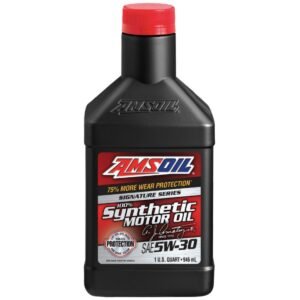
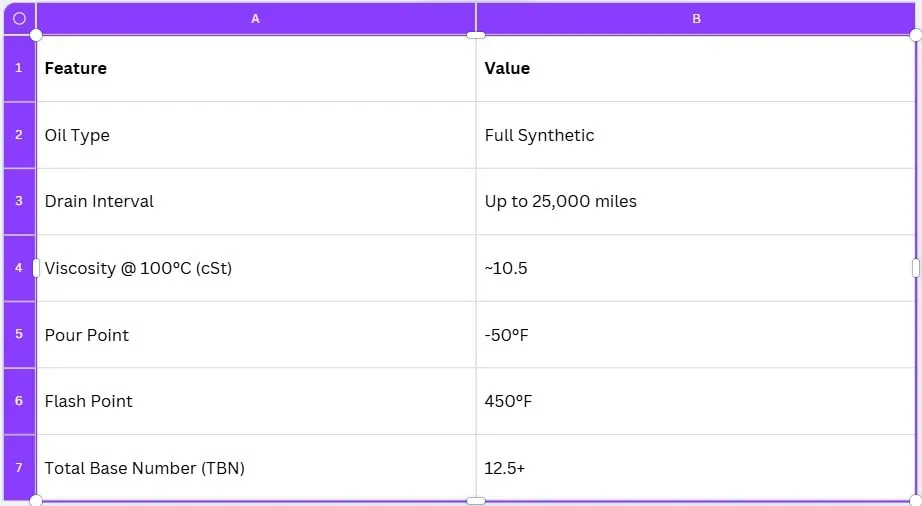
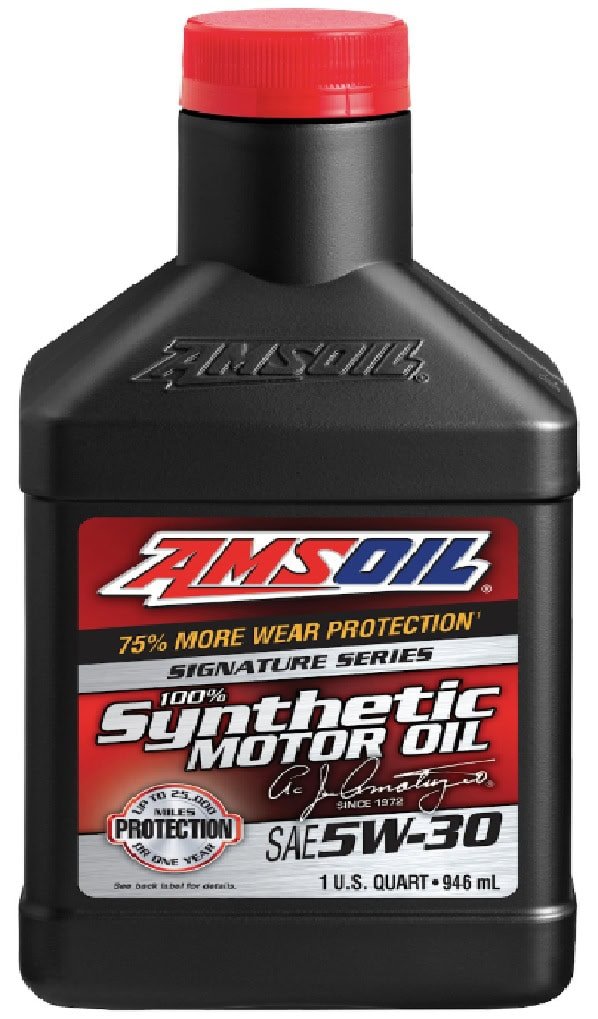
Yes, by the published data: AMSOIL’s Signature Series line runs on Group IV PAO synthetic base oil with a TBN of 12.5, a NOACK volatility of 6.7%, and a rated drain interval of 25,000 miles or one year. Mobil 1, Pennzoil Platinum, and Valvoline Advanced Full Synthetic are all built on Group III hydrocracked synthetic, publish lower TBN reserves (typically in the 7–9.5 range), and none rate a full product line past a standard 5,000–10,000 mile OEM interval.
If you change oil every 5,000 miles no matter what’s in the bottle, the practical difference is small. If you tow, run a turbo, drive in temperature extremes, or want to stop changing oil four times a year, the gap in the data below is real, and the AMSOIL Preferred Customer discount is what makes acting on that gap affordable.
| Specification | AMSOIL Signature Series | Mobil 1 | Pennzoil Platinum | Valvoline Adv. Full Synthetic | Advantage |
|---|---|---|---|---|---|
| Base oil type | Group IV PAO synthetic | Group III hydrocracked | Group III hydrocracked | Group III hydrocracked | AMSOIL |
| Total Base Number (TBN, ASTM D2896) | 12.5 | ~7.8–8.5 (typical range) | ~8.0–8.7 (typical range) | 9.3 | AMSOIL · ~35–60% more reserve |
| NOACK volatility (ASTM D5800) | 6.7% | ~9–11% (typical range) | ~8–10% (typical range) | ~9.3% | AMSOIL · noticeably less evaporation |
| Pour point | -51°C / -60°F | ~-40°C / -40°F | ~-39°C / -38°F | -36°C / -33°F | AMSOIL |
| Cold-crank simulator (ASTM D5293) | Better low-temp flow vs. competitors tested | Good, widely proven | Good, widely proven | <6,000 cP at -30°C | AMSOIL |
| API certification | API SP | API SP | API SP | API SP | Tie |
| Rated drain interval | 25,000 mi / 1 yr (every grade) | 5,000–10,000 mi | 5,000–7,500 mi | Manufacturer’s normal schedule | AMSOIL |
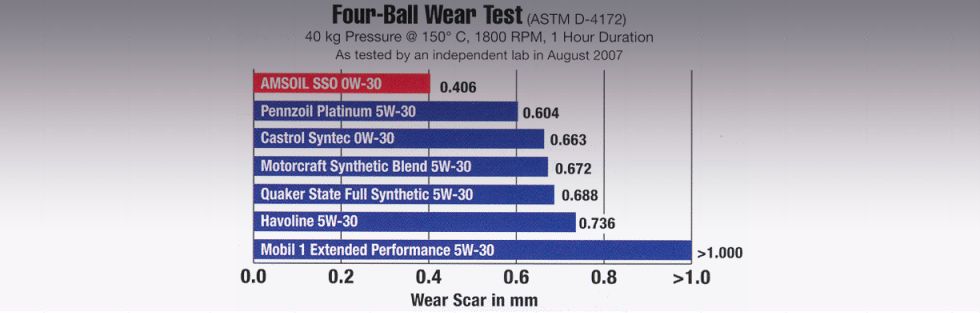
| Independent wear testing (Sequence IVA) | Published: strong results vs. industry limit | Meets spec, not independently published head-to-head | Meets spec, not independently published head-to-head | Meets spec, not independently published head-to-head | AMSOIL (no competing published number) |
| Approx. retail price, 5 qts | ~$44 (PC price ~$33) | ~$30–$38 | ~$26–$32 | ~$28–$34 | Store-bought synthetics |
Figures pulled from each manufacturer’s current published product data sheets as of 2026, where publicly available. Not every competitor publishes TBN or NOACK on their retail data sheet, so ranges reflect typical published values for Group III synthetics in this category. Manufacturers update formulations periodically, so always confirm against the current sheet before making a purchasing decision based on a single number. PC price reflects the 25% AMSOIL Preferred Customer discount available through Lube Oil Sales.
This is where “is AMSOIL the best oil” turns into “is it worth paying for.” Here’s the actual arithmetic for a 15,000 miles/year driver running 5W-30:
At a 5,000-mile OEM interval, a store-bought synthetic is genuinely cheaper per quart than AMSOIL at full retail. But you’re paying shop labor (or spending your own time) three times a year instead of once. Once you add the 25% AMSOIL Preferred Customer discount, the per-quart gap nearly disappears, and you’re left with one oil change a year instead of three, plus a meaningfully higher TBN and lower NOACK the whole way through the interval.
The honest caveat: an extended interval is only as good as the mid-interval oil analysis and a filter rated for that mileage. Towing, short-trip city driving, dusty environments, and turbo soot load can all shorten a real-world safe interval below 25,000 miles regardless of brand. An oil analysis around 15,000 miles confirms you’re still in spec; most drivers stretching intervals do this as a matter of course.
Want the “PC price” numbers in the table above, not the retail ones?
Join as an AMSOIL Preferred Customer for $20/year, and every order (Signature Series included) is 25% off, permanently.
Why AMSOIL tests ahead of Mobil 1, Pennzoil, and Valvoline
Group IV PAO vs. Group III: the base oil gap
This is the root of almost every other number in the table above. AMSOIL Signature Series is built on Group IV PAO (polyalphaolefin), a base stock chemically synthesized from uniform isoparaffin molecules rather than refined from crude. Mobil 1, Pennzoil Platinum, and Valvoline Advanced Full Synthetic (like most mainstream “full synthetic” oils on the shelf today) are built on Group III hydrocracked mineral oil. Group III earned the legal right to be labeled “synthetic” in North America after a 1999 API ruling, but it starts as crude oil that’s heavily processed, not built from scratch.
The honest bottom line: at a 5,000-mile OEM interval, the gap between Group III and Group IV is small enough that most drivers will never notice it. The gap shows up at extended mileage, sustained high heat, and high load, exactly where TBN reserve and evaporation resistance start to matter.
TBN: the number that decides how far you can push an interval
TBN (Total Base Number) measures how much acid-neutralizing reserve is left in the oil. Combustion byproducts and blow-by gases produce acids that attack bearings and cylinder walls over time; TBN is the oil’s defense against that. AMSOIL Signature Series publishes a TBN of 12.5, well above the 7.8 to 9.3 range typical of the Group III synthetics from Mobil 1, Pennzoil, and Valvoline. That reserve is exactly why AMSOIL can rate the entire Signature Series line for 25,000 miles or one year, while the major shelf brands defer to your vehicle’s standard maintenance schedule.
NOACK volatility: where the oil you paid for actually goes
NOACK measures how much oil evaporates under sustained high heat. A lower number means less oil burns off, less top-off, and fewer deposits left behind on hot surfaces like turbocharger bearings and piston crowns. AMSOIL’s published NOACK for Signature Series 5W-30 is 6.7%. The major store-bought synthetics typically land in the 8 to 11% range depending on grade. On a turbocharged engine that runs hot for minutes after shutdown, that’s the difference between an oil that stays where it’s needed and one that’s quietly disappearing.
Cold pour point: relevant if you actually see winter
AMSOIL Signature Series has a published pour point of -51°C (-60°F), noticeably lower than the -36°C to -40°C range typical of Mobil 1, Pennzoil, and Valvoline. Both are well within range for the overwhelming majority of US and Canadian winters; this stat matters most in genuinely extreme cold (northern Canada, high-altitude winter, or equipment that sits outside all night at -20°F or colder) rather than a typical Northern-state winter.
Seal compatibility: will switching cause leaks?
This comes up in oil forums often enough to address directly. Base oil chemistry has a small but real effect on rubber and elastomer seals:
- PAO (Group IV), the base of AMSOIL Signature Series, has a slight tendency to shrink elastomer seals compared to mineral-based oils
- Ester-based components, sometimes blended into full-synthetic formulas, tend to swell seals slightly
- Group III hydrocracked oil, the base of Mobil 1, Pennzoil, and Valvoline, behaves closer to conventional mineral oil on seals since it starts from the same crude feedstock
In practice, this rarely causes real-world problems in either direction: all four brands formulate seal-conditioning additives specifically to offset their base oil’s natural tendency. A fresh full-synthetic switch doesn’t typically cause new leaks in a healthy engine with OEM-spec seals. Where it can matter: a high-mileage engine (100k+) with already-hardened seals, where any oil chemistry change can reveal a leak that was about to happen anyway. This is part of why every major brand sells a high-mileage-specific formula.
When a store-bought synthetic makes more sense
Intellectual honesty matters here, same as it does on every page on this site. Mobil 1, Pennzoil Platinum, and Valvoline Advanced Full Synthetic are all legitimate, API SP certified full synthetics, and one of them is the better practical choice in a few specific situations:
- You’re doing OEM-standard 5,000 to 7,500 mile intervals no matter what oil is in the pan; at that interval, the reserve AMSOIL carries goes largely unused
- You need to buy oil tonight at a parts store or big-box retailer and can’t wait on shipping
- Your vehicle is still under a factory warranty service plan that requires receipts from a specific brand or service chain
- Budget is the deciding factor and you’re comfortable with a shorter, more frequent change schedule
For everyone else (drivers who tow, run a turbo, drive in temperature extremes, or want to cut the number of oil changes they deal with per year), the published spec data consistently favors AMSOIL Signature Series, especially once the Preferred Customer discount is factored into the cost side of the decision.
Is AMSOIL the best oil for your vehicle type?
Trucks & towing
Towing pushes oil temperature and shear stress higher than normal driving. AMSOIL’s higher TBN and lower NOACK matter most exactly here, since sustained heat under load is what burns off a lower-reserve oil fastest. Alan has run Signature Series across his own off-road builds and supports Class 8 fleet accounts throughout the Houston metro and Gulf Coast, where sustained towing and high ambient heat make TBN reserve the deciding factor in real-world oil analysis reports.
Best pick: AMSOIL Signature Series 5W-30 or 0W-40 for towing and hauling. See our full diesel truck oil guide for Cummins, Duramax, and Powerstroke-specific recommendations.
Motorcycles
AMSOIL’s V-Twin and metric motorcycle formulas are purpose-built around shared-sump engines, where one fluid lubricates the engine, transmission, and wet clutch simultaneously, and the published TBN/NOACK advantage carries over to motorcycle service intervals too. Alan runs Signature Series-line lubricants in his own Road King and has for years.
Best pick: AMSOIL V-Twin Synthetic Motor Oil for Harley-Davidson, AMSOIL 10W-40 Synthetic Metric Motorcycle Oil for Japanese and European bikes.
Cold climates
Every oil in this comparison will start and flow in a normal winter. AMSOIL’s lower published pour point gives it a real edge once temperatures drop into truly extreme cold, below roughly -20°F, where cold-start wear does the most damage to bearings before oil pressure builds.
Best pick: AMSOIL Signature Series 0W-20 or 0W-30 for cold-climate daily drivers.
Diesel engines
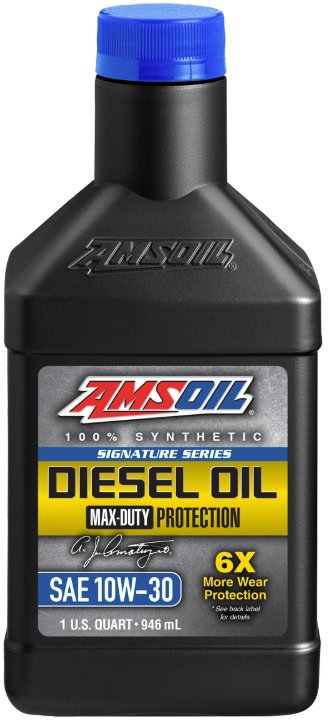
Diesel engines generate more soot and combustion byproducts than gasoline engines, which puts more demand on TBN reserve specifically. AMSOIL Diesel All-In-One is purpose-built around that reality with a published TBN of 13.4 and a 25,000-mile drain interval. Pennzoil’s and Valvoline’s diesel-specific lines are capable, widely available options but don’t publish a comparable extended-drain claim.
Best pick: AMSOIL Diesel All-In-One for Cummins, Duramax, and Powerstroke applications.
Everyday commuters
If your driving is mostly easy commuting on a standard 5,000 to 7,500 mile interval, the practical gap between AMSOIL and a quality store-bought synthetic narrows considerably: you’re simply not driving hard enough or long enough between changes to use up AMSOIL’s extra reserve. This is the one segment where a store-bought synthetic at retail can be the more cost-efficient pick, unless you’d rather change oil once a year instead of two or three times.
Best pick: AMSOIL XL Series for a lower-cost extended-performance option at a 10,000–12,000 mile interval, or Signature Series as a Preferred Customer if you’d rather stretch it further.
| Vehicle type | Recommended AMSOIL product | vs. store-bought synthetics |
|---|---|---|
| Trucks & towing | Signature Series 5W-30 / 0W-40 | AMSOIL wins |
| Motorcycles | V-Twin / Metric Motorcycle Oil | AMSOIL wins on TBN/NOACK |
| Cold climates | Signature Series 0W-20 / 0W-30 | AMSOIL wins |
| Diesel engines | Diesel All-In-One | AMSOIL wins |
| Everyday commuters, short OEM intervals | XL Series or Signature Series | Close / tie at retail price |
How to actually get the “PC price” numbers above
Every comparison on this page uses two AMSOIL prices: retail and “PC price.” Here’s what that second number actually is, because it’s the difference between AMSOIL being a premium splurge and AMSOIL being competitively priced.
- 25% off retail pricing on every AMSOIL product, every order, for the life of your membership
- Free shipping on orders of $100 or more
- $20 a year, no minimum purchases, no obligation to sell or recruit anyone
- Direct from AMSOIL: motor oil, filters, transmission fluid, gear lube, and powersports products, all at the same discount
- A $5 birthday coupon and ongoing dollars-back rewards on qualifying purchases
If you’ve seen chatter online about AMSOIL’s direct-sales/dealer structure and wondered whether that makes it a pyramid scheme: it doesn’t. The Preferred Customer tier is simply a wholesale-pricing membership for people who want to buy the product. There’s no requirement to sell anything, recruit anyone, or maintain a “downline.” You’re a customer getting a discount, full stop. (Selling AMSOIL as a Dealer is a separate, optional program; see the link at the bottom of this page if that’s what you’re actually looking for.)
Is $20/year worth it?
Run the math from the cost table above: a single 5-quart Signature Series oil change costs roughly $70 to $80 at retail versus $55 to $60 at PC pricing: a savings of $15 to $20 on one oil change. If you buy AMSOIL even once a year, the $20 membership pays for itself, and every order after that is straight savings. For anyone doing their own oil changes on a truck, motorcycle, diesel, or powersports equipment, this typically isn’t a close call.
Sign up once, save 25% on every order after
$20/year · no minimums · no obligation to sell · free shipping $100+
“People ask me ‘is AMSOIL really the best oil’ like there’s a single right answer for every vehicle. There isn’t. What I tell them is: look at what you actually do with your vehicle. If you’re doing easy commuting on a 5,000-mile interval, a good store-bought synthetic will treat you fine. But if you tow, run a turbo, or just want to stop thinking about oil changes every few months, the TBN and NOACK numbers explain exactly why AMSOIL earns its reputation, and the Preferred Customer discount is what makes that decision easy on the wallet instead of a splurge.”
Is AMSOIL really the best oil, or is this just dealer marketing?
The published data sheets back it up, not just marketing copy. AMSOIL Signature Series publishes a TBN of 12.5 against the 7.8–9.3 range typical of Mobil 1, Pennzoil, and Valvoline, plus a NOACK volatility around 6.7% versus a typical 8–11% for those competitors. These are independently testable, published numbers on each manufacturer’s own data sheet, not bottle claims.
Is AMSOIL worth the extra cost?
At full retail, mainly if you’re in demanding driving conditions or want extended intervals. As a Preferred Customer at 25% off, a once-a-year AMSOIL oil change typically costs about the same as buying a store-bought synthetic two to three times a year, while giving you higher TBN reserve, lower evaporation, and fewer oil changes to deal with.
Is the AMSOIL Preferred Customer program a pyramid scheme or MLM?
No. It’s a $20/year wholesale-pricing membership for customers. There’s no requirement to sell products or recruit anyone. You simply get 25% off every order. Selling AMSOIL as an independent Dealer is a separate, entirely optional program.
Can I switch to AMSOIL from Mobil 1, Pennzoil, or Valvoline without flushing my engine?
Yes. AMSOIL is fully compatible with synthetic and conventional oils already in your engine. Drain your existing oil at your normal interval and refill with the correct AMSOIL Signature Series viscosity grade; no flush required for a routine switch.
Does using AMSOIL void my warranty?
No. Under the Magnuson-Moss Warranty Act, a manufacturer cannot void your warranty simply because you used a different oil brand, as long as the oil meets the required API specification and viscosity grade. AMSOIL Signature Series meets or exceeds API SP and current GM dexos1 requirements. Keep your receipts as documentation either way.
How often do I really need to change AMSOIL oil?
AMSOIL Signature Series is rated for up to 25,000 miles or one year under normal driving conditions. Severe conditions (towing, extreme heat/cold, stop-and-go driving, dusty environments) call for more frequent changes or a mid-interval oil analysis to confirm you’re still in spec.
Where can I buy AMSOIL at the same price Alan pays?
Through the AMSOIL Preferred Customer program: $20/year for a permanent 25% discount on every order, no minimums, no sales obligation. You can also call Alan directly at 225-441-6397 for help picking the right grade for your vehicle.
Get AMSOIL at 25% off, today
Join as an AMSOIL Preferred Customer through Lube Oil Sales and pay wholesale pricing on every product, including Signature Series in the exact grade your engine needs.
- 25% off every AMSOIL product, permanently
- Free shipping on orders $100+
- No minimum orders, no obligation to sell
- $5 birthday coupon + $5-back rewards
Join as Preferred Customer, save 25%
Only $20/yr · Dealer #1243776 · Free shipping $100+
Already buying for friends, family, or a shop? Learn about becoming an AMSOIL Dealer instead.
AMSOIL vs Mobil 1
AMSOIL vs Valvoline
AMSOIL vs Castrol
Is AMSOIL Worth It?
Disclaimer & affiliate disclosure: Specification data sourced from AMSOIL’s, Mobil 1’s, Pennzoil’s, and Valvoline’s current published product data sheets as of 2026, where publicly available; manufacturers periodically update formulations, so confirm current figures before purchase. AMSOIL, Mobil 1, Pennzoil, and Valvoline are registered trademarks of their respective owners. Lube Oil Sales is an Authorized AMSOIL Independent Dealer (Dealer #1243776). This page contains affiliate links to AMSOIL’s Preferred Customer program; purchases made through these links support Lube Oil Sales at no additional cost to you.